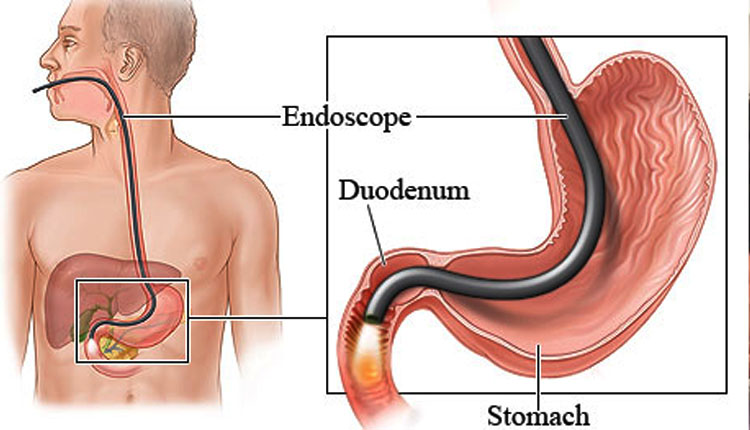
Endoscopy is the insertion of a long, thin tube directly into the body to observe an internal organ or tissue in detail. It can also be used to carry out other tasks including imaging and minor surgery.
Endoscopes are minimally invasive and can be inserted into the openings of the body such as the mouth or anus.
Alternatively, they can be inserted into small incisions, for instance, in the knee or abdomen. Surgery completed through a small incision and assisted with special instruments, such as the endoscope, is called keyhole surgery.
Because modern endoscopy has relatively few risks, delivers detailed images, and is quick to carry out, it has proven incredibly useful in many areas of medicine. Today, tens of millions of endoscopies are carried out each year.
In this article, we will explain some of the types of endoscopy, why and how they are performed, the general procedure, and any potential risks.
Fast facts on endoscopy
Here are some key points about endoscopy. More detail and supporting information is in the main article.
- Endoscopies are quick and relatively safe procedures.
- The first endoscope was designed in 1806.
- The main reasons for endoscopy are investigation, confirmation, and treatment.
- Endoscopy can be used to remove tumors or polyps from the digestive tract.
Endoscopy is useful for investigating many systems within the human body; these areas include:
Gastrointestinal tract: esophagus, stomach, and duodenum (esophagogastroduodenoscopy), small intestine (enteroscopy), large intestine/colon (colonoscopy, sigmoidoscopy), bile duct, rectum (rectoscopy), and anus (anoscopy).
Respiratory tract: Nose (rhinoscopy), lower respiratory tract (bronchoscopy).
Ear: Otoscopy
Urinary tract: Cystoscopy
Female reproductive tract (gynoscopy): Cervix (colposcopy), uterus (hysteroscopy), fallopian tubes (falloposcopy).
Through a small incision: Abdominal or pelvic cavity (laparoscopy), interior of a joint (arthroscopy), organs of the chest (thoracoscopy and mediastinoscopy).